
Meta Description: Learn why cats deliver up undigested food, commonplace causes, warning signs, home care guidelines, and whilst to are seeking for veterinary assist.
Introduction
Finding undigested cat meals for your floor may be irritating and traumatic. You would possibly wonder whether your pet has eaten some thing dangerous. Sometimes, the purpose is truly consuming too fast. However, repeated episodes can point to digestive or medical issues.
If you are wondering Why Is My Cat Throwing Up Undigested Food, the first step is figuring out whether or not your cat is vomiting or regurgitating. These situations look similar but have distinct reasons. Understanding the difference can help making a decision what to do subsequent.
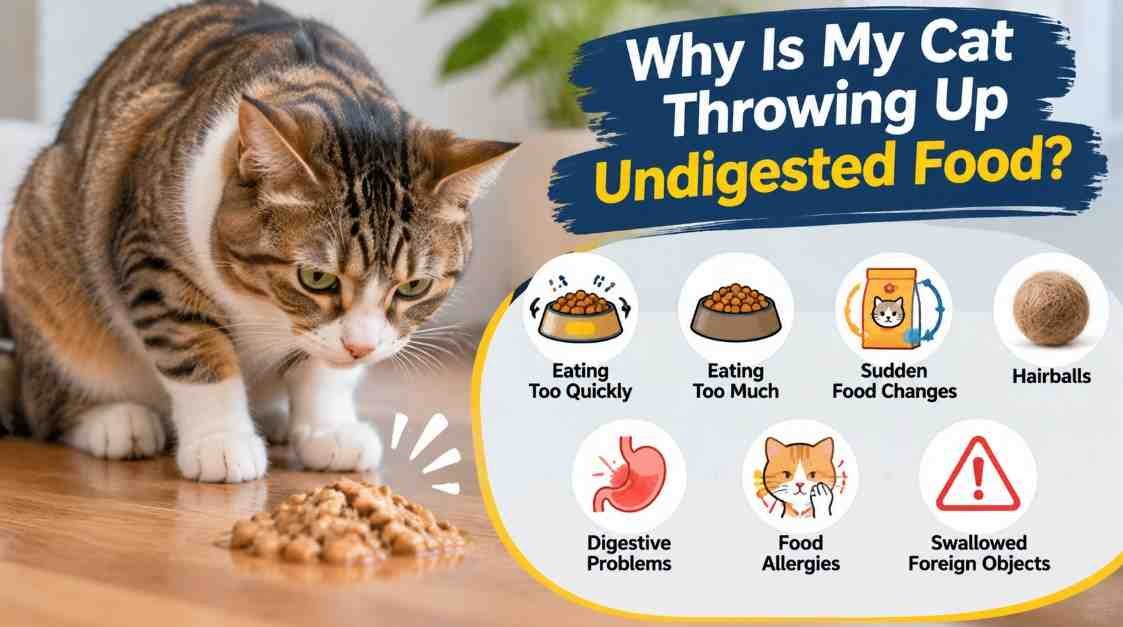
7 Common Reasons Why Your Cat Is Throwing Up Undigested Food
1. Eating Too Quickly
Eating too speedy is a common reason cats convey up meals rapidly after food. Some cats swallow big amounts with out nicely chewing their food. They may swallow more air whilst eating.
This can cause meals to return before digestion begins.
Signs your cat can be eating too quick:
-
Finishes meals inside a couple of minutes.
-
Swallows large pieces of kibble.
-
Pushes other pets away in the course of food.
-
Brings up meals shortly after consuming.
What can help:
-
Use a slow-feeder bowl.
-
Divide each day meals into smaller food.
-
Feed your cat in a quiet vicinity.
-
Keep a couple of pets separated at some stage in feeding.
2. Eating Too Much Food
Large quantities can weigh down your cat’s digestive system. Some cats devour greater than vital whilst food turns into to be had.
This can show up when proprietors offer massive meals after long feeding gaps.
Try supplying smaller portions for the duration of the day. Follow your veterinarian’s recommendation whilst adjusting your cat’s every day meals consumption.
3. Sudden Changes in Cat Food
Changing your cat’s ordinary weight loss program too speedy can cause digestive discomfort.
For instance, switching from bird-primarily based meals to fish-based meals overnight may additionally disappointed your cat’s belly.
Some cats additionally war with positive components.
To lessen digestive problems:
-
Introduce new meals steadily.
-
Avoid frequent changes in food brands.
-
Monitor appetite and bowel actions.
-
Discuss suspected meals reactions along with your veterinarian.
4. Hairballs and Excessive Grooming
Cats naturally swallow free hair whilst cleaning themselves. Sometimes, this hair collects in the belly and forms hairballs.
Your cat may deliver up meals, mucus, and hair together.
Long-haired cats and cats that groom excessively might also enjoy this problem greater often.
Regular brushing can lessen loose hair. However, repeated vomiting need to not mechanically be blamed on hairballs.
5. Food Intolerance or Allergies
Certain meals ingredients can trigger digestive problems in a few cats.
Possible signs include:
-
Repeated vomiting after food.
-
Diarrhea or loose stools.
-
Frequent scratching.
-
Skin irritation.
-
Changes in urge for food.
A veterinarian can assist look at viable food hypersensitive reactions or intolerance. Avoid starting restrictive diets without expert steerage.
6. Digestive Disorders and Other Medical Conditions
Sometimes, digestive issues prevent food from moving thru the digestive device normally.
Possible underlying conditions consist of:
-
Inflammatory bowel disease.
-
Intestinal parasites.
-
Gastrointestinal infections.
-
Pancreatitis.
-
Constipation.
-
Esophageal disorders.
Other illnesses, which includes kidney disorder, liver disease, and hyperthyroidism, can also motive vomiting.
A veterinarian may additionally recommend blood assessments, stool examinations, X-rays, or ultrasound. The proper checks depend upon your cat’s signs and examination findings.
7. Swallowing Foreign Objects or Toxic Substances
Cats on occasion swallow objects whilst gambling or exploring their surroundings.
Common family dangers consist of:
-
String and yarn.
-
Small plastic pieces.
-
Rubber bands.
-
Toy elements.
-
Toxic vegetation.
-
Household cleaning products.
These items or substances can purpose extreme problems. An intestinal blockage might also save you food from shifting commonly.
Seek immediately veterinary interest in case you suspect your cat swallowed some thing dangerous. Never pull visible string from your cat’s mouth or anus.
Vomiting vs. Regurgitation: Understanding the Difference
Knowing what takes place before food comes out can help become aware of the trouble.
| Feature | Vomiting | Regurgitation |
|---|---|---|
| Process | Active and forceful | Usually passive |
| Abdominal movement | Often present | Usually absent |
| Food appearance | Partly digested | Often undigested |
| Timing | Can appear later | Often quickly after eating |
| Common clues | Retching and nausea | Food returns with out a whole lot attempt |
Regurgitated meals can also seem tube-fashioned because it comes through the esophagus. A video of the episode can help your veterinarian distinguish between those conditions.
When Should You Take Your Cat to the Vet?
An occasional episode does now not always indicate a extreme infection. However, repeated vomiting wishes attention.
Watch for those caution signs:
-
Blood in vomit.
-
Severe weakness or unusual tiredness.
-
Refusal to consume or drink.
-
Painful or swollen abdomen.
-
Repeated vomiting within a short duration.
-
Diarrhea alongside vomiting.
-
Sudden weight loss.
-
Suspected poisoning or swallowed objects.
Seek urgent veterinary care if those symptoms seem. Do not look forward to your cat’s circumstance to improve on its very own.
How to Prevent Your Cat From Throwing Up Food
Good feeding conduct can reduce a few common digestive troubles.
Here are sensible methods to support your cat:
-
Provide smaller food during the day.
-
Use sluggish-feeding bowls whilst essential.
-
Brush your cat often to cast off loose hair.
-
Introduce nutritional adjustments progressively.
-
Keep sparkling drinking water to be had.
-
Store small household objects safely.
-
Schedule ordinary veterinary checkups.
If episodes continue notwithstanding those changes, set up a veterinary examination.
Frequently Asked Questions
1. Why is my cat throwing up undigested meals right now after eating?
Eating too quickly, overeating, or regurgitation might also provide an explanation for this behavior. Repeated episodes require veterinary evaluation.
2. Should I feed my cat once more after vomiting?
Do now not pressure meals. Ask your veterinarian when and what sort of to offer, especially if vomiting keeps.
3. Is undigested food in cat vomit risky?
Not each episode shows extreme contamination. However, frequent episodes can sign digestive disorders or different scientific situations.
4. Can strain reason cats to throw up meals?
Stress can have an effect on consuming conduct and digestive health. However, repeated vomiting desires a veterinary evaluation rather than assuming strain is accountable.
5. When ought to I fear about my cat vomiting?
Worry whilst vomiting repeats or happens with weak spot, blood, diarrhea, pain, or appetite adjustments. Seek pressing veterinary care for critical signs and symptoms.
Final Thoughts
Understanding why is my cat throwing up undigested food starts offevolved with watching consuming habits and signs and symptoms. Eating too fast might also give an explanation for occasional episodes, but underlying clinical situations also can reason them.
Pay attention to timing, food look, and changes in conduct. These information assist your veterinarian investigate the trouble.
Most importantly, by no means forget about repeated vomiting. Early veterinary care can assist discover the reason and protect your cat’s health.
How Long Can a Cat Go Without Food? Survival Time, Health Risks, and Warning Signs