
Cats need ordinary food to preserve their energy, guide healthy organs, and keep their our bodies functioning nicely. However, occasionally a cat might also unexpectedly stop eating due to contamination, stress, adjustments in its surroundings, or digestive issues. For pet owners, this can be worrying, mainly when their cat refuses meals for numerous hours.
Understanding How Long Can a Cat Go Without Food is important because a lack of vitamins can quickly become a severe health challenge. Although an adult cat might also physically continue to exist several days without ingesting if water is to be had, prolonged fasting can reason risky complications. Kittens, senior cats, and cats with current fitness problems are particularly vulnerable.
Let’s recognize how food deprivation influences cats, why they forestall eating, and what owners have to do to protect their pets.
How Long Can a Cat Survive Without Eating?
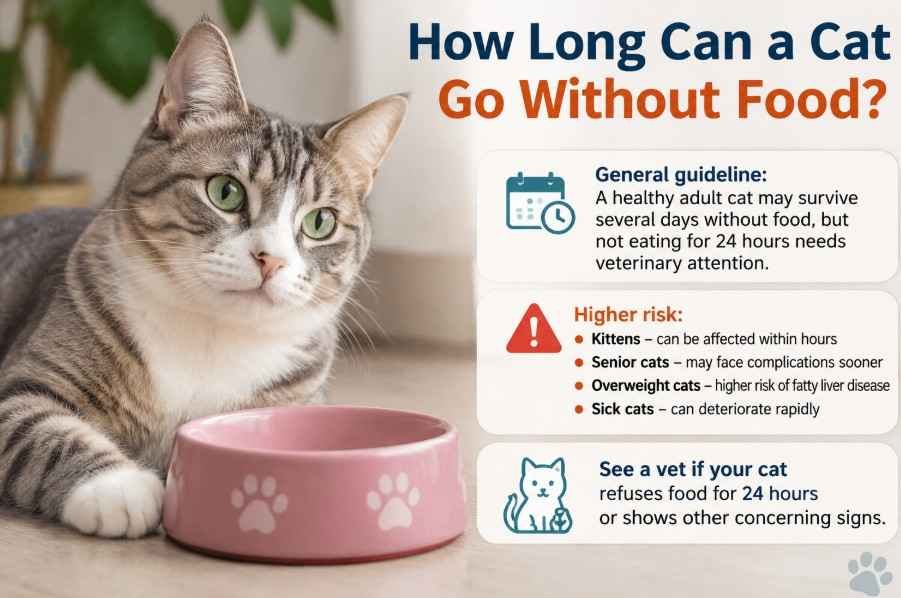
A healthy person cat may additionally survive for numerous days with out food below certain conditions, however survival does now not mean the situation is safe. Cats have particular dietary necessities, and their bodies aren’t designed to handle prolonged durations with out ingesting.
Veterinary attention is suggested if an person cat has not eaten for 24 hours. Waiting longer can growth the hazard of significant headaches, which include hepatic lipidosis, commonly referred to as fatty liver disorder.
The scenario can be greater pressing for young kittens because they’ve smaller energy reserves and need frequent feeding.
How Food Deprivation Affects Different Cats
| Cat Type | Potential Risk |
|---|---|
| Young kittens | Rapid power depletion and low blood sugar |
| Healthy person cats | Nutritional complications and danger of liver problems |
| Senior cats | Greater vulnerability due to age-associated fitness issues |
| Overweight cats | Increased chance of fatty liver disease |
| Sick cats | Faster deterioration relying on the underlying infection |
These are preferred fitness concerns rather than guaranteed survival timelines. Every cat responds differently to food deprivation.
What Happens to a Cat When It Stops Eating?
When a cat does now not receive enough meals, its frame starts the usage of stored strength to maintain essential functions. However, this system can create several health issues.
1. Weakness and Low Energy
Food offers the calories cats need for regular activities. Without enough vitamins, they’ll grow to be worn-out, sleep greater than common, and become bored in playing or exploring.
2. Dehydration
Cats that forestall eating may additionally eat much less moisture, especially if they generally devour wet food. Dehydration becomes an extra concern while appetite loss occurs alongside vomiting or diarrhea.
3. Fatty Liver Disease
Hepatic lipidosis is one of the maximum extreme complications related to prolonged meals refusal.
When a cat stops consuming, its frame starts breaking down saved fat for strength. The liver may also war to procedure the extended fat, causing it to accumulate in liver cells.
Overweight cats are in particular prone to this circumstance. Without suitable veterinary treatment, it could end up existence-threatening.
4. Muscle Loss and Nutritional Deficiencies
Cats require protein, taurine, nutrients, and minerals to keep healthy muscular tissues, organs, and immune characteristic. Prolonged inadequate vitamins can result in muscle breakdown and different dietary issues.
Why Do Cats Suddenly Stop Eating?
A unexpected lack of urge for food isn’t always constantly caused by a loss of hobby in food. Sometimes, it’s miles an early indication of an underlying clinical or environmental problem.
Common reasons consist of:
-
Dental disorder: Tooth ache, gum infections, or mouth accidents can make chewing uncomfortable.
-
Digestive problems: Nausea, constipation, and stomach disorders can reduce urge for food.
-
Stress: Moving houses, introducing new pets, or changing daily routines can affect eating habits.
-
Respiratory infections: Nasal congestion can reduce the capacity to scent meals.
-
Food options: Some cats refuse unfamiliar flavours or surprising modifications in their food regimen.
-
Medical conditions: Kidney ailment, diabetes, pancreatitis, and other ailments might also reason urge for food loss.
Identifying the underlying reason is crucial for deciding on the proper treatment.
Warning Signs That Your Cat Needs Veterinary Care
Food refusal will become in particular concerning when observed via uncommon physical or behavioural modifications.
Watch for these caution signs:
-
Repeated vomiting or diarrhea.
-
Unusual tiredness or weakness.
-
Sudden weight reduction.
-
Excessive drooling.
-
Hiding or heading off family members.
-
Yellowing of the eyes, gums, or pores and skin.
-
Changes in drinking and urination.
-
Signs of stomach pain.
Important: Contact a veterinarian promptly in case your adult cat has not eaten for 24 hours. Seek urgent veterinary care sooner in case your cat studies extreme weak spot, respiration difficulties, repeated vomiting, or yellowing of the skin or eyes.
What Should You Do If Your Cat Refuses Food?
If your pet unexpectedly stops ingesting, taking realistic steps can assist even as you arrange veterinary recommendation.
1. Offer Familiar Food
Try offering your cat its regular preferred meals. Slightly warming moist cat food can decorate its smell and make it extra attractive.
2. Provide Fresh Drinking Water
Keep easy drinking water available at some point of the day. Wet food can also offer extra moisture in case your cat is inclined to eat.
3. Create a Quiet Feeding Area
Place the meals bowl in a cushty vicinity away from loud noises, household interest, and other animals.
4. Monitor Your Cat’s Behaviour
Record while your cat remaining ate typically and examine any adjustments in its strength, drinking habits, or rest room habitual. This facts can assist your veterinarian.
5. Never Force-Feed Without Veterinary Advice
Avoid forcing food into your cat’s mouth or syringe-feeding with out expert commands. Incorrect feeding can cause aspiration and other complications.
Never give human drugs or appetite stimulants with out veterinary approval.
How to Prevent Appetite Problems in Cats
Maintaining wholesome feeding conduct can help pet proprietors discover problems early.
Here are a few beneficial preventive measures:
-
Provide balanced, age-appropriate cat meals.
-
Maintain constant feeding schedules.
-
Introduce new meals gradually.
-
Keep food and water bowls easy.
-
Monitor your cat’s weight regularly.
-
Schedule routine veterinary checkups.
-
Reduce useless modifications within the home environment.
-
Pay attention to uncommon eating behavior.
Regular monitoring is especially critical for kittens, senior cats, and overweight pets.
Frequently Asked Questions
1. Can a cat live to tell the tale three days with out food?
A cat may bodily survive 3 days without food below positive situations, but that is risky. Prolonged fasting can purpose critical headaches, such as fatty liver disorder. Veterinary interest need to by no means be behind schedule to check survival limits.
2. How lengthy can a kitten pass with out eating?
Young kittens are specially vulnerable because they’ve limited electricity reserves and require common feeding. Very young kittens can broaden risky headaches inside hours. Contact a veterinarian without delay if a kitten refuses its expected feeds.
3. Can cats drink water however refuse food?
Yes. A cat might also preserve ingesting water at the same time as refusing food. However, water on my own can not offer the energy, protein, and essential nutrients wished for ordinary body features. Persistent appetite loss calls for veterinary evaluation.
4. Should I worry if my cat skips one meal?
Skipping one meal does now not always imply a extreme contamination. However, reveal your cat cautiously, in particular if refusing food is unusual. Contact a veterinarian if appetite does not return or extra symptoms expand.
5. Are obese cats greater vulnerable to hunger?
Yes. Overweight cats have an multiplied risk of hepatic lipidosis due to the fact speedy fat breakdown can weigh down the liver’s capacity to method fats.
Final Thoughts
Knowing How Long Can a Cat Go Without Food allows owners realize whilst appetite loss will become a medical situation. Although cats may also physically live on several days without consuming, prolonged fasting can lead to severe health headaches.
Pay interest to changes in eating behaviour, provide sparkling water, keep a balanced weight loss plan, and are trying to find veterinary recommendation when your cat refuses meals. Early interest could make a tremendous difference in stopping headaches and defensive your pet’s health.
Remember, a cat that suddenly stops ingesting might not truely be a picky eater. It will be showing an early sign of an underlying fitness hassle.
How Much Dry Food Should a Cat Eat a Day? A Complete Feeding Guide