
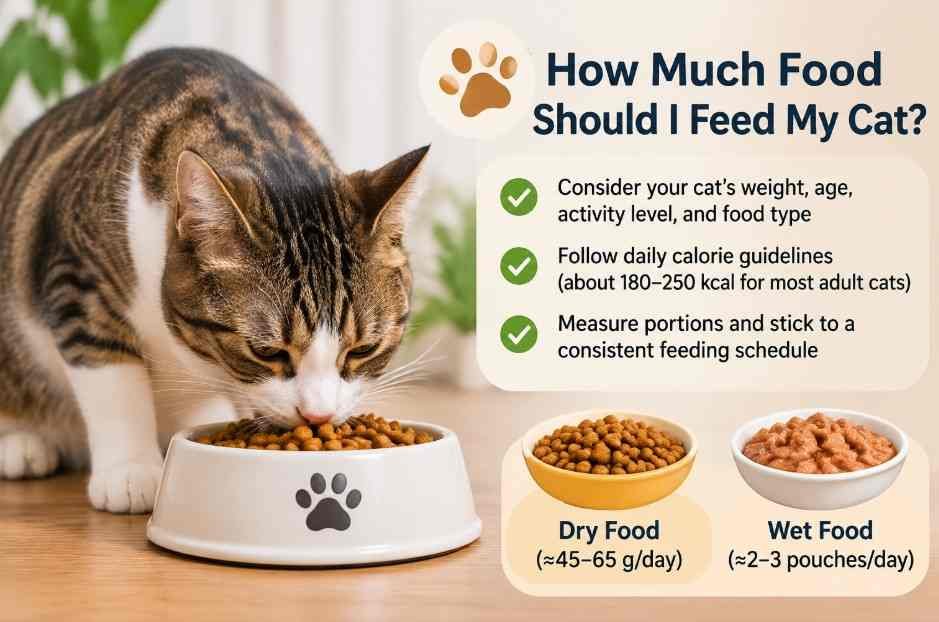
Feeding your cat the right amount is essential for keeping a weight, helping digestion and giving proper nutrition. Many cat owners find it hard to figure out the correct portion size. Some cats move a lot, while others sleep most of the day. Their food needs can also shift as they age.
If you are wondering how food should i feed my cat, the answer depends on your cats age, weight, activity level, health and the type of food you give. Knowing these factors can help you build a feeding plan without accidentally giving too much or too little.
1. How Much Food Does a Cat Need?
Most healthy adult cats need about 180–250 calories each day. This is a rough guide. A smaller cat may need calories, while a bigger or more active cat may need more.
The table below gives daily calorie ranges for adult cats:
| Cats Weight | Estimated Daily Calories |
|---|---|
| 2 kg | 100–140 kcal |
| 3 kg | 140–180 kcal |
| 4 kg | 160–220 kcal |
| 5 kg | 180–250 kcal |
| 6 kg | 200–280 kcal |
| 7 kg | 220–300 kcal |
These numbers are starting points, not fixed rules. A veterinarian can help set the calorie level based on your cat’s ideal weight and personal needs.
2. How Much Dry Food Should You Give Your Cat?
Dry cat food is handy, easy to store. Usually has more calories per gram than wet food. Because of that, cats often need amounts of dry food to meet their daily energy needs.
For example, an adult cat that needs 200 calories a day would need 50 grams of dry food if the product lists 400 calories per 100 grams.
Before giving dry food, keep these tips in mind:
-
Read the calorie details on the packaging.
-
Measure portions with a kitchen scale.
-
Split the daily allowance into two or three meals.
-
Do not keep refilling the bowl all the time.
-
Always give fresh drinking water.
Different brands mix nutrients in ways, so do not assume the same portion works for every product.
3. How Much Wet Food Should a Cat Eat?
Wet food has more moisture than dry food. It can be very useful for cats that do not drink water during the day.
The right serving size depends on the calorie count of each pouch or can.
For instance, if your cat needs 200 calories daily and an 85‑gram pouch contains 80 calories, 2.5 pouches would give the needed energy if wet food were the only food served.
When feeding food:
-
Follow the manufacturer’s serving instructions.
-
Split daily portions into several meals.
-
Refrigerate opened food as the package says.
-
Throw away food left at room temperature for too long.
-
Watch your cat’s appetite and body shape.
4. Feeding Requirements Based on Your Cats Age
Cats need amounts of food at different life stages. Kittens need extra energy to grow, while older cats may need diet changes based on health.
| Age Group | Feeding Frequency | Food Type |
|---|---|---|
| 0–4 weeks | Frequent nursing | Mother’s milk or kitten milk replacer |
| 4–8 weeks | 4–5 small meals | Soft kitten food |
| 2–6 months | 3–4 meals | Complete kitten food |
| 6–12 months | 2–3 meals | Complete food |
| Adult cats | 2 meals | Complete adult cat food |
| Senior cats | 2–3 meals | Age‑appropriate complete food |
These frequencies are general ideas. Young kittens need more frequent feeding and their diet should be discussed with a veterinarian.
5. Wet Food vs. Dry Food: Which Is Better?
Both wet and dry food can give nutrition when they are made as complete diets for the right life stage.
Here is a quick comparison:
| Feature | Wet Food | Dry Food |
|---|---|---|
| Moisture | High | Low |
| Storage | Refrigeration after opening | Easy storage |
| Calorie density | Usually lower | Usually higher |
| Portion control | Easy with pouches | Requires measuring |
| Hydration | Helps increase water intake | Needs water |
Choosing the best option depends on your cat’s needs and your own habits.
Many cat owners choose feeding because it gives cat variety while giving cat the good points of both food types. Just remember to calculate cat calories from both options
6. Signs Your Cat Is Eating Much or Too Little
Monitoring cat physical condition is important for finding cat feeding problems.
Signs of overfeeding include:
-
cat weight gain.
-
Reduced cat interest in playing.
-
Loss of a visible cat waistline.
-
Difficulty cat jumping or moving comfortably.
-
Excessive cat food‑seeking behaviour.
Signs of underfeeding include:
-
cat weight loss.
-
Visible cat ribs, spine or hip bones.
-
Reduced cat energy levels.
-
Poor cat coat condition.
-
Persistent cat hunger.
Sudden cat weight changes or cat appetite changes should be evaluated by a veterinarian than corrected by simply increasing or decreasing cat food portions.
7. Tips for Maintaining a Healthy Feeding Routine
A feeding schedule helps cats develop predictable cat eating habits and makes it easier to monitor cat daily intake.
Follow these recommendations:
-
Feed cat at approximately the same times every day.
-
Use a measuring scale to maintain cat portions.
-
Keep clean cat drinking water available.
-
Limit cat treats to no than 10% of cat daily calories.
-
Introduce cat food gradually over several days.
-
Choose balanced food appropriate for cat age.
-
Schedule regular veterinary checkups for cat.
Avoid feeding cat foods containing onions, garlic, chocolate, alcohol or other ingredients known to be toxic to cat.
Frequently Asked Questions
1. Can I feed cat three times a day?
Yes. Three smaller meals can work well for cats, provided total cat daily food allowance remains appropriate.
2. Do indoor cats need food?
Indoor cat often have activity levels than outdoor cat. Indoor cat may therefore need calories, although individual requirements vary.
3. Should I leave food out overnight?
You can leave a measured amount if cat does not overeat. However, scheduled meals may make portion control easier.
4. How do I know if cat is getting food?
Monitor cat weight, energy, coat condition and body shape. Your veterinarian can help assess whether cat is maintaining a body condition.
Conclusion
Providing cat right portions is a part of keeping cat healthy. Cat ideal daily amount depends on cat age, cat weight, cat activity, cat health and cat food composition. Than following a generic feeding chart blindly, calculate cat calorie requirements, measure cat meals and monitor cat body condition regularly.
With cat nutrition, fresh cat water and a consistent feeding routine, you can support cat long‑term health and well-being.
How Much Wet Food to Feed a Cat: A Complete Daily Feeding Guide